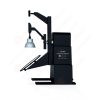
LM-79 Goniofotometr z ruchomym detektorem (lustro typu C)
LSG-6000
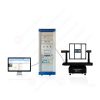
Goniofotometr z precyzyjną rotacją oprawy
LSG-1890B
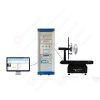
Wysokoprecyzyjny gonospektroradiometr oprawy oświetleniowej
LSG-1890BCCD

Goniofotometr do lamp samochodowych i sygnalizacyjnych
LSG-1950
Goniofotometr do lamp sygnalizacyjnych
LSG-1950S
Urządzenie sygnalizacji wizualnej VAD Fire Alarm Goniofotometr
LWG-1930
Kompaktowy goniofotometr
LSG-1200A
Goniofotometr LED
LWG-1100
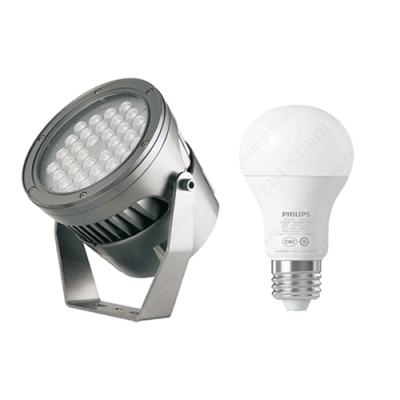 Rozwiązania do testowania diod LED i opraw oświetleniowych
 LM-79 oraz LM-80 Rozwiązania testowe
 Rozwiązania do testowania sterowników LED
 Rozwiązania testowe urządzeń gospodarstwa domowego
 Rozwiązania do testów mobilnych i sieciowych
 Rozwiązania do testowania elektroniki samochodowej
 Rozwiązania testowe audio-wideo i IT
 Rozwiązania do testowania kabli i przewodów
 Rozwiązania testowe wtyczek i gniazd
 Rozwiązania testowe przełączników zasilania
 Rozwiązania do testów transformatorów
 Rozwiązania testowe zabawek elektrycznych
 Rozwiązania do testowania liczników energii
 Rozwiązania testowe narzędzi napędzanych silnikiem
Wybierz organizację
przeglądać standardy
Abstrakcyjny:
Salt‑spray corrosion is a major cause of material failure in marine, coastal and industrial atmospheric environments. As core environmental‑simulation equipment for artificial accelerated corrosion simulation, the salt test chamber (salt spray test chamber) can reproduce salt‑containing atmospheric corrosion environments under laboratory conditions and rapidly evaluate the corrosion resistance of metal coatings, organic coatings, electronic components and finished‑products. Taking the LISUN YWX/Q‑010 salt spray corrosion tester as the research object, this paper illustrates the working principle, structural characteristics and key technical parameters of the salt test chamber, sorts out domestic and international test standards implemented by the equipment, analyzes its practical application scenarios in electronics & electrical, hardware processing, coating, new energy and other industries, and discusses how auxiliary devices improve test safety and environmental‑friendliness. This work provides references for selecting corrosion‑resistance testing equipment and conducting salt‑spray tests.
1 Wprowadzenie
Metals and protective coatings suffer salt‑spray atmospheric corrosion in natural environments. Chloride ions penetrate protective layers and trigger electrochemical corrosion, resulting in component rusting, coating blistering and peeling, short‑circuits and poor contact of electronic devices, which directly reduce product service life and endanger operational safety. Natural exposure tests take a long time, ranging from several months to years, and cannot meet the efficiency requirements of product R&D iteration and mass quality inspection. The salt test chamber, also known as salt spray corrosion tester, artificially simulates marine and industrial salt‑spray environments to accelerate corrosion processes. It can identify protective‑layer defects and structural‑design vulnerabilities of products within a short period, and has become essential testing equipment for reliability laboratories.
LISUN YWX/Q‑010 salt spray corrosion tester is a salt test chamber designed for batch testing of medium‑to‑large‑size samples. It supports three mainstream test modes: Neutral Salt Spray (NSS), Acetic Acid Salt Spray (AASS) and Copper‑Accelerated Acetic‑Acid Salt Spray (CASS). It complies with Chinese GB standards as well as ISO, ASTM and IEC international standards.
2 Basic Principles of Salt‑Spray Corrosion Test for Salt Test Chamber
Salt‑spray corrosion is essentially electrochemical corrosion. Sodium chloride in air dissociates into chloride ions, which settle on material surfaces and form conductive electrolyte liquid films. With small molecular size and strong penetration capacity, chloride ions can destroy passivation films on metal surfaces and infiltrate micro‑pores in plating and coatings, causing anodic dissolution of base metals and rust spots, which further expand corrosion damage.
The salt test chamber artificially builds a controllable salt‑spray environment. Sodium chloride solution with specified concentration is atomized into fine salt mist by nozzles driven by compressed air that has been heated and filtered in a saturation barrel. Constant temperature and salt‑spray sedimentation rate are maintained inside the closed chamber. Higher temperature accelerates electrochemical corrosion reactions to realize accelerated testing. Continuous spray and programmable intermittent spray modes simulate sustained salt‑spray or alternating wet‑dry actual working conditions. The corrosion resistance of different materials and surface processes can be compared and evaluated, so as to locate weak protective positions and design defects.
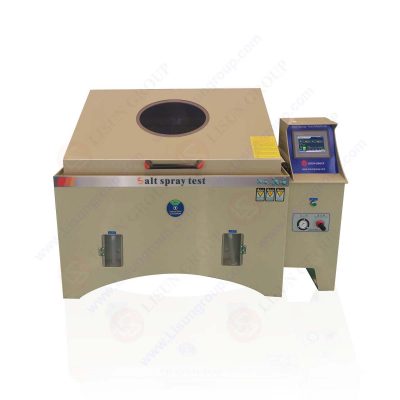
YWX/Q-010_Maszyna do testowania mgły solnej
3 Structure and Technical Parameters of LISUN YWX/Q‑010 Salt Test Chamber
The YWX/Q‑010 salt test chamber is integrally manufactured with imported corrosion‑resistant PP plates without welding seams to prevent saline solution leakage and cabinet corrosion. It is equipped with high‑precision temperature‑control units and automatic spray systems. Stainless‑steel gas‑spring covers reduce operational difficulty for large‑volume door opening. Multiple safety‑alarm modules including water‑shortage alarm, dual over‑temperature protection and low‑air‑pressure alarm are integrated. The test timer ranges from 0 h to 9999 h to support long‑term non‑stop operation.
Key technical parameters of this salt test chamber are shown in Table 1:
Tabela 1 Kluczowe parametry techniczne LISUN YWX/Q‑010 Salt Test Chamber
| Pozycja parametru | Specyfikacja techniczna |
| Wymiar komory wewnętrznej | 1200mm × 800mm × 500mm |
| Outer Cabinet Dimension | 1700mm × 1150mm × 1200mm |
| Objętość komory | 480L |
| Objętość zbiornika solanki | 32L |
| Power Supply & Rated Power | 3‑phase AC380V/50Hz, 2.5KW; 60Hz customized available |
| Available Sample Placement Space | 1000mm × 600mm × 300mm |
| Zakres temperatur komory testowej | Otoczenie ~ +55℃ |
| Zakres temperatur lufy nasyconej | Otoczenie ~ +70℃ |
| Jednorodność temperatury | ≤2 ℃ |
| Wahania temperatury | ≤ ± 0.5 ℃ |
| Salt‑spray Sedimentation Rate | 1‑2 ml/80cm²/h (average value of 16‑hour test) |
| Tryb natryskiwania | Continuous spray, intermittent spray, programmable test |
| Obsługiwane typy testów | NSS Neutral Salt Spray, AASS Acetic‑Acid Salt Spray, CASS Copper‑Accelerated Acetic‑Acid Salt Spray |
| Wymagania dotyczące źródła powietrza | User‑supplied compressed air; inlet pressure ≥0.4 MPa; spray pressure adjustable from 0.07‑0.17 MPa |
| Uchwyt próbki | V‑groove fixture, O‑shaped round bar; sample placement angle: 20°±5° |
| Ochrona Bezpieczeństwa | Low‑water‑level alarm, electronic + mechanical dual over‑temperature alarm, low‑air‑pressure alarm |
For optional accessories, this salt test chamber requires an air compressor for stable air supply. The recommended model is LS‑EU800W2‑55L air compressor. For closed‑lab indoor installation, YWX/Q‑ETD salt‑spray waste‑gas treatment unit is optional. It adopts spray washing, multi‑layer packing filtration and baffled wire‑mesh demisting processes to neutralize salt‑spray and acid‑spray exhaust gas without changing internal chamber pressure and test conditions. It realizes harmless indoor exhaust and protects operators and lab instruments from corrosive waste gas.
4 Main Test Standards Complied With by the Equipment
The YWX/Q‑010 salt test chamber supports multiple domestic and international salt‑spray corrosion test standards. Major Chinese standards include GB/T 2423.17‑2021 *Environmental testing‑Part 2‑17: Test methods‑Test Ka: Salt spray*, GB/T 10125‑2021 *Artificial atmosphere corrosion testing‑Salt‑spray test*, GB/T 1771‑2021 *Paints and varnishes‑Determination of resistance to neutral salt‑spray*, GB/T 5938‑2017 *Test methods for corrosion resistance of metal coatings and chemical conversion coatings for light‑industry products*. International standards include ASTM B117‑2022, ISO 9227:2017, IEC 60068‑2‑11:2013, DIN 50021‑2018 and so on, covering testing requirements for electronics, hardware, coatings and other industries. Different standards specify slight differences in solution preparation, temperature and spray cycles. Corresponding standard requirements shall be confirmed for equipment parameter setting before actual tests.
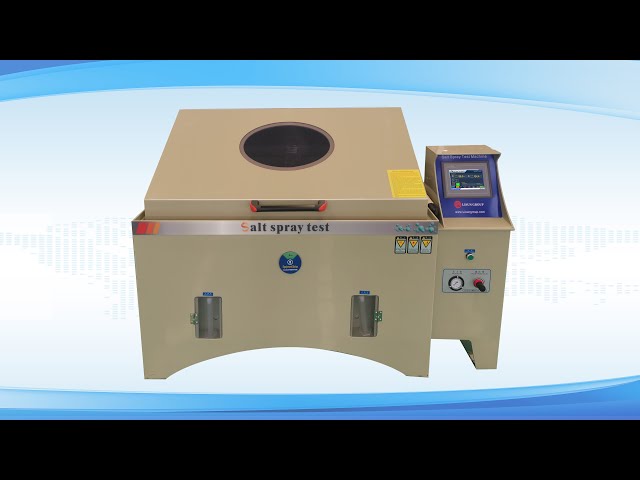
5 Industrial Applications of Salt Test Chamber
5.1 Przemysł elektroniczny i elektryczny
Test objects include connectors, chip pins, resistors, capacitors, miniature circuit‑breakers, sensors, power adapters, switch‑housing and other components. Using the YWX/Q‑010 salt test chamber for salt‑spray testing evaluates coating corrosion resistance of electronic components and verifies whether housing sealing design has vulnerabilities. It predicts risks such as short‑circuit, poor contact and insulation degradation caused by salt‑spray invasion in coastal computer rooms and outdoor distribution boxes, and supports reliability verification of electrical products in accordance with GB/T 2423.17‑2021, EIA‑364‑26 and other specifications.
5.2 Hardware and Metal‑Processing Industry
Screws, springs, hinges, aluminum‑alloy profiles, bicycle parts and other hardware mostly adopt galvanizing, chromium‑plating, nickel‑plating, passivation and other surface‑protection processes. With the salt test chamber for accelerated salt‑spray corrosion, anti‑rust performance of different coating processes and base materials can be compared to select material and process schemes and detect hidden defects such as pinholes and missing plating on coatings. It evaluates durability of furniture and construction hardware in coastal humid environments and provides objective data for incoming‑material inspection and process improvement.
5.3 Coating and Surface‑Treatment Industry
Coating test panels, powder‑sprayed workpieces and varnish‑covered parts are placed inside the salt test chamber for salt‑spray assessment. Operators observe coating blistering, cracking, peeling and substrate rusting to evaluate coating adhesion and corrosion resistance. It supports R&D and production of automotive and furniture coatings under GB/T 1771‑2021 to quantify coating protective performance.
5.4 Household Appliances and Outdoor New‑Energy Equipment
Air‑conditioner outdoor‑unit housings, outdoor lamps, PV module frames, junction boxes and communication base‑station enclosures work in long‑term outdoor salt‑spray exposure. The salt test chamber simulates marine salt‑spray environments to test corrosion resistance of finished‑products and components, and detect corrosion risks at structural gaps and sealing positions in advance, so as to avoid equipment failure and safety hazards caused by corrosion during field service.
Wnioski 6
The salt test chamber (salt spray test chamber) is indispensable environmental‑simulation equipment for artificial‑accelerated salt‑spray corrosion evaluation. Featuring a 480‑liter test chamber, high‑precision temperature control and three salt‑spray test modes, the LISUN YWX/Q‑010 salt spray corrosion tester balances large‑volume sample loading and test accuracy. It rapidly exposes protective‑layer defects and structural‑design vulnerabilities of metal coatings, paints and finished‑products. Matched with air compressors and waste‑gas‑treatment devices, it expands applicable scenarios and meets laboratory safety and environmental‑protection requirements.
It should be noted that accelerated salt‑spray test results obtained from the salt test chamber are mainly used for relative performance comparison among samples under identical test conditions, and cannot be directly converted into real‑world natural‑environment service life. In practical testing, operators shall strictly follow corresponding standards and control key parameters including salt‑spray sedimentation rate, temperature and solution concentration to guarantee repeatability and comparability of test data, so as to provide scientific test basis for material selection, product‑design optimization and factory quality control.
Tagi:YWX / Q-015Twoj adres e-mail nie bedzie opublikowany. Wymagane pola są zaznaczone *

 Angielski
 中文简体
中文简体 Русский
 Español
 Português
 Türkçe
 العربية
 Deutsch
 Polski
 Italiano
 Français
 한국어
한국어 ไทย
ไทย Tiếng Việt
 日本語
日本語